
Hardscape
Pavers vs. poured concrete for NJ patios and driveways
By Mehal Construction Corp. · Updated October 2026 · 5 min read
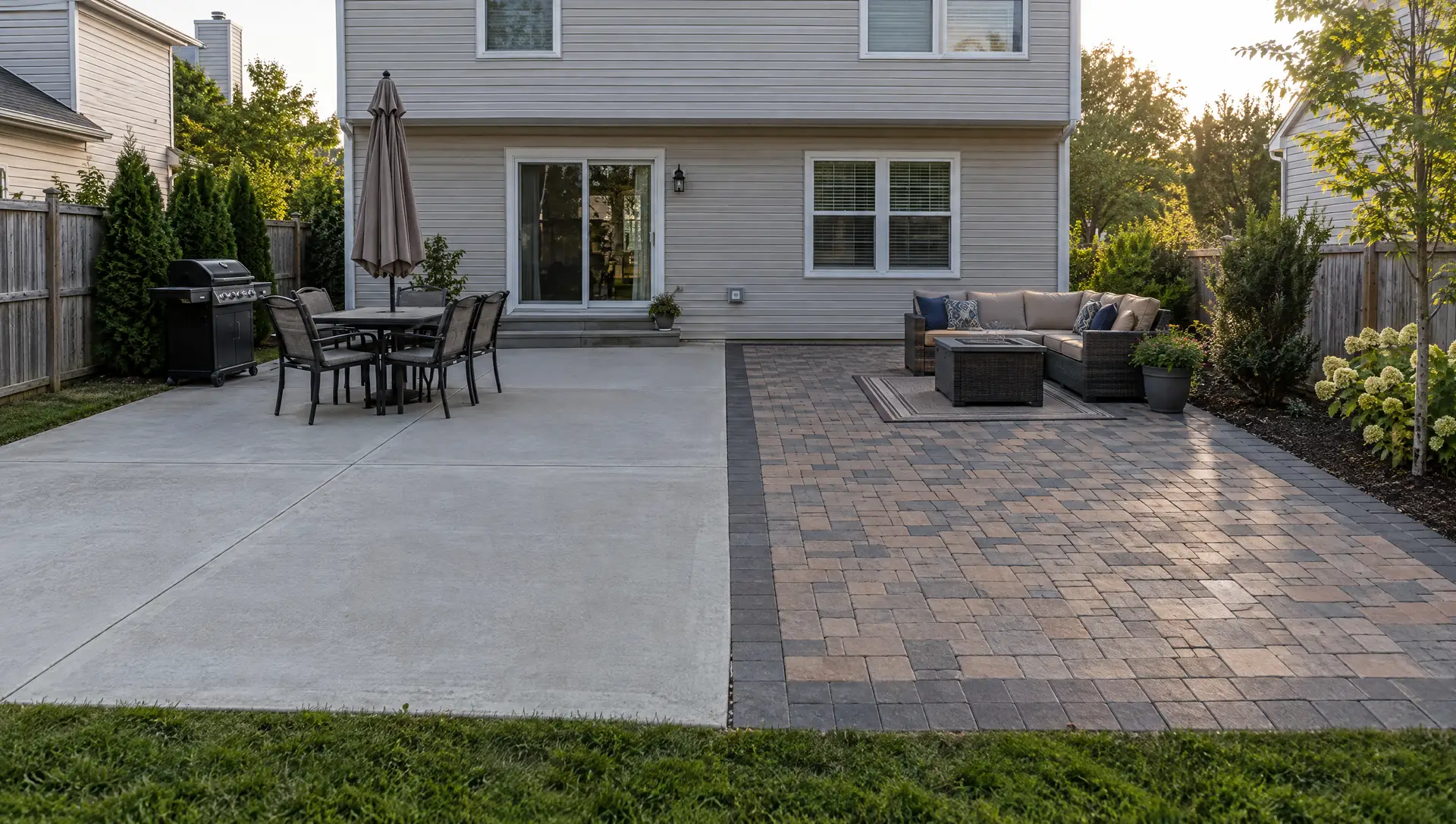
Key points
- Base preparation and drainage matter more than the surface you choose.
- Pavers are many small units with joints, so they can flex with the ground and be repaired a few pieces at a time.
- Concrete is one continuous slab. It's smooth and simple to maintain, but cracks and patches are harder to hide.
- Get both options priced on the same scope so you're comparing like for like.
Both pavers and poured concrete can last for decades in New Jersey, and both can fail early if the base and drainage are wrong. The right choice depends on how you use the space, how you want it to look and how much upkeep you're willing to do. Here's how they compare.
Quick comparison
| Pavers | Poured concrete | |
|---|---|---|
| Look | Many colors, shapes and patterns; borders and inlays | Clean and uniform; can be broom-finished, stamped or colored |
| Freeze-thaw | Joints let units shift slightly without cracking | Control joints direct cracking; the slab can still crack or heave |
| Repairs | Lift and reset the affected area; matching units can be stored | Patches usually show; badly damaged sections are cut out and replaced |
| Upkeep | Joint sand refills, weeds in joints, optional sealing | Sealing every few years helps; keep joints sealed |
| Snow removal | Plow and shovel with care at edges | Smooth surface is easy to shovel and plow |
| Ready to use | Usually right after installation | Needs time to cure before foot traffic and longer before cars |
How New Jersey winters affect each
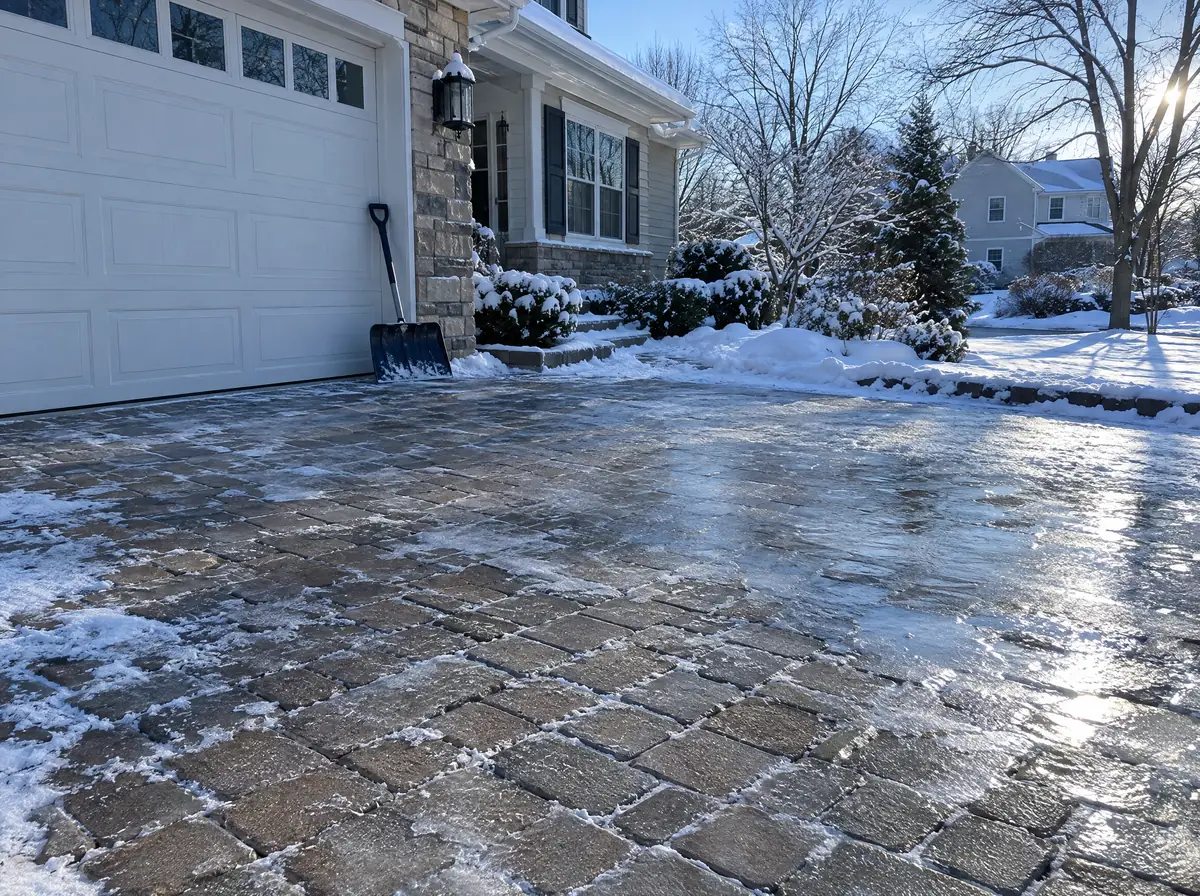
New Jersey goes through a lot of freeze-thaw cycles. Water gets into the surface and the base, freezes, expands and thaws again, over and over.
- With pavers, the joints give the surface some room to move. If the base is well compacted and drains, the units stay in place. If water sits in the base, sections can settle or heave.
- With concrete, control joints are cut so the slab cracks in straight lines where you expect it to. Air-entrained concrete, a proper base and good drainage all help the slab stand up to freezing.
De-icing salt is hard on both. Many contractors recommend avoiding salt on new concrete during its first winter. Ask your contractor what to use instead.
Repairs over time
This is the biggest practical difference. If a tree root, a utility trench or a settled spot affects a paver area, the pavers can be lifted, the base fixed and the same units put back. With concrete, a damaged area is usually cut out and replaced, and the new concrete rarely matches the old color exactly.
When each one makes sense
Pavers often fit when:
- You want patterns, borders or a specific look
- The area may need access later, such as over utilities
- You'd rather fix small areas than replace whole sections
Poured concrete often fits when:
- You want a smooth, uniform surface that's easy to shovel
- The space is large and simple in shape
- You want the lowest day-to-day upkeep
Questions to ask before you choose
- How deep will the base be for a patio, and for a driveway?
- How will water drain away from the house?
- For concrete: will there be reinforcement, and where will the control joints go?
- For pavers: what edge restraint and joint sand will you use?
- How soon can we walk on it and drive on it?
Common questions
Which lasts longer in New Jersey, pavers or concrete?+
Can I use salt on a new concrete driveway?+
Are paver driveways hard to plow?+
Further reading
Deciding between pavers and concrete?
Ask us to price both on the same scope, and compare them side by side.
Related guides
Homeowners
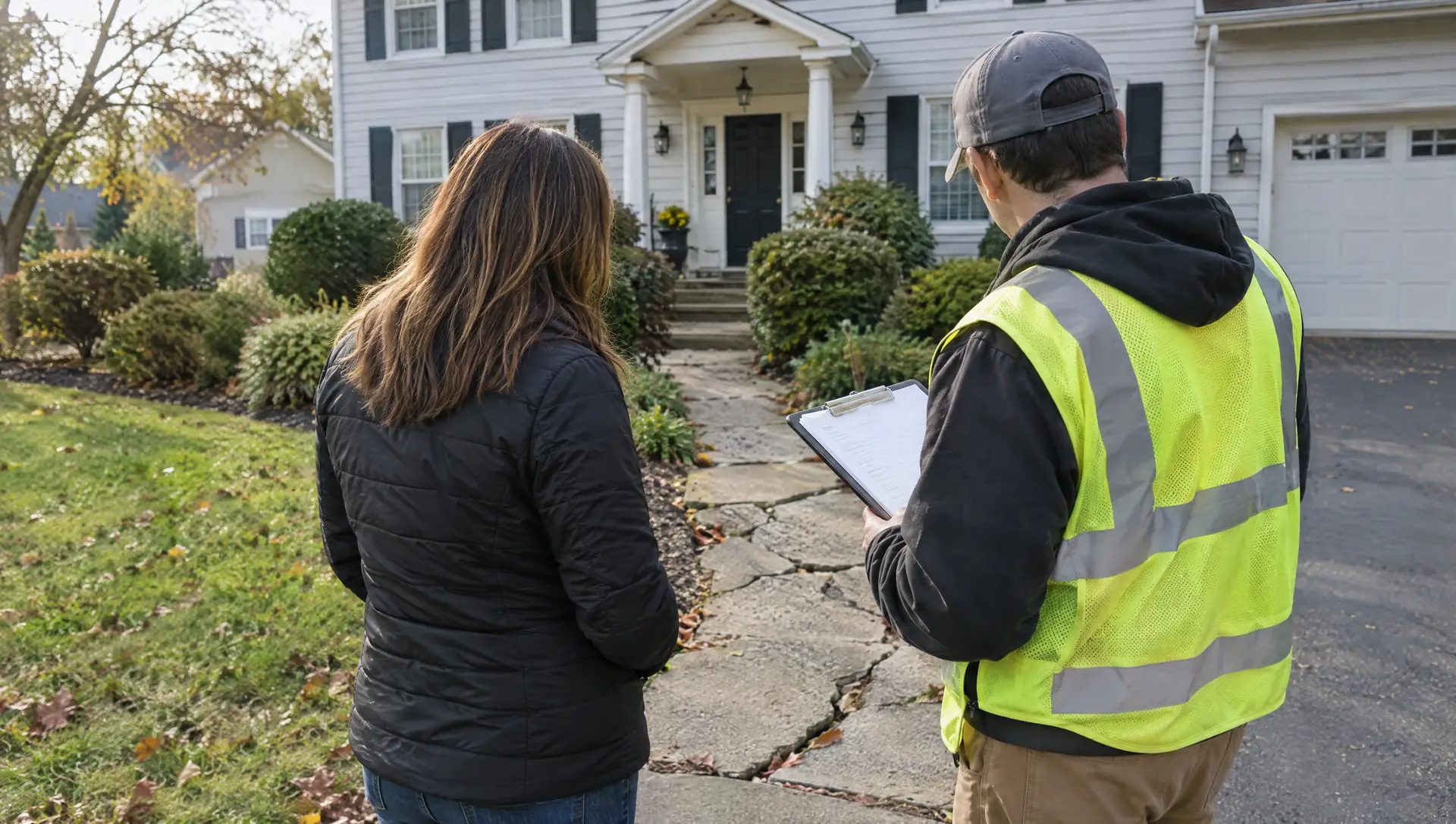
What to know before hiring a masonry or concrete contractor in NJ
Registration, written contracts, insurance and the questions that protect your project.
Read the guide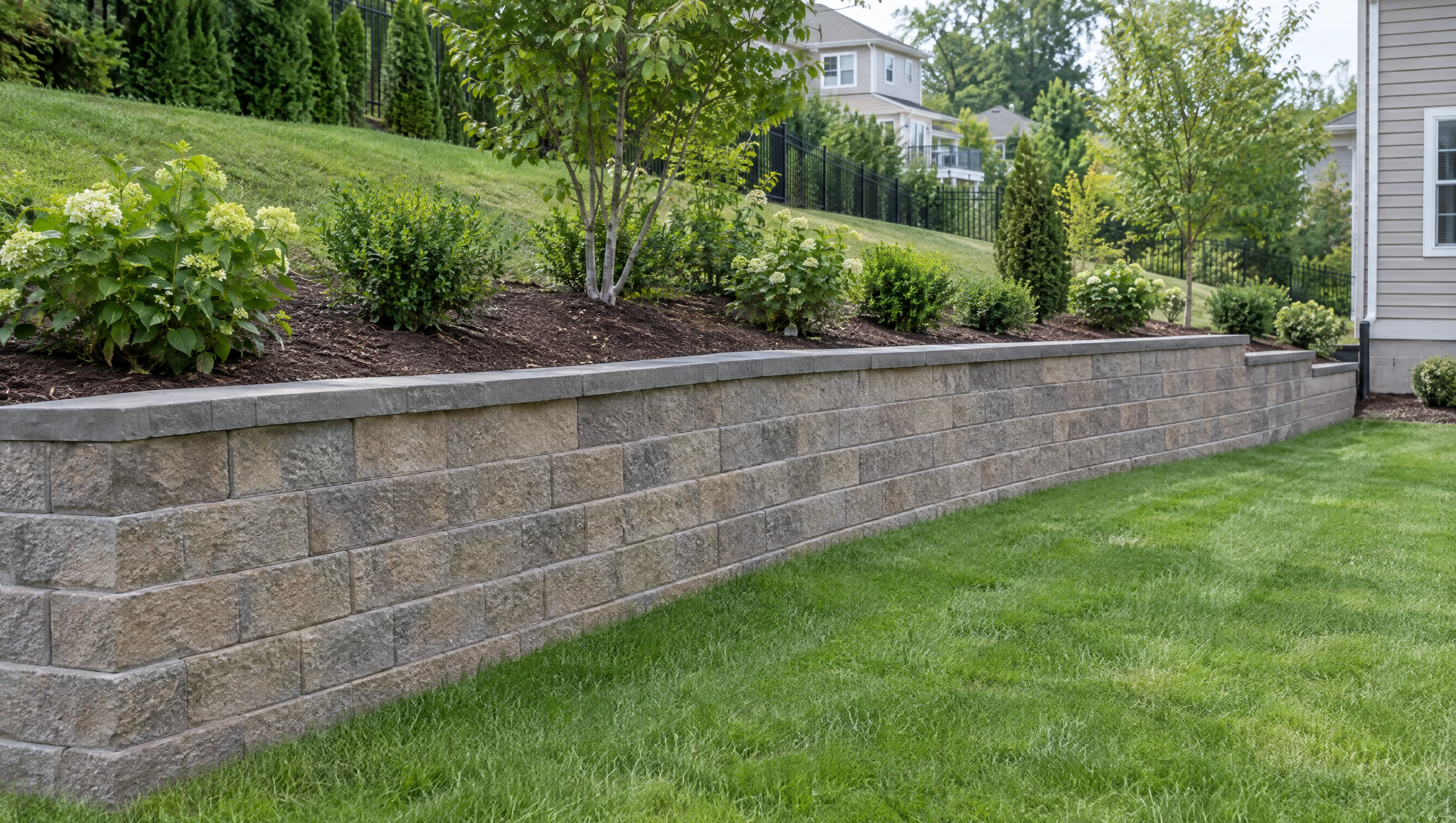
Hardscape
Retaining wall basics in NJ: permits, drainage and frost depth
When a wall needs a permit, why drainage matters most, and what goes behind the block.
Read the guide