
Public Works
ADA curb ramps: a plain-language guide for NJ municipalities and owners
By Mehal Construction Corp. · Updated October 2026 · 6 min read
Key points
- The U.S. Access Board's Public Right-of-Way Accessibility Guidelines (PROWAG) took effect September 7, 2023. They become enforceable standards when the Department of Justice and Department of Transportation adopt them.
- Under PROWAG, ramp running slope is 8.3% maximum and cross slope is 2.1% maximum (with exceptions at some crossings).
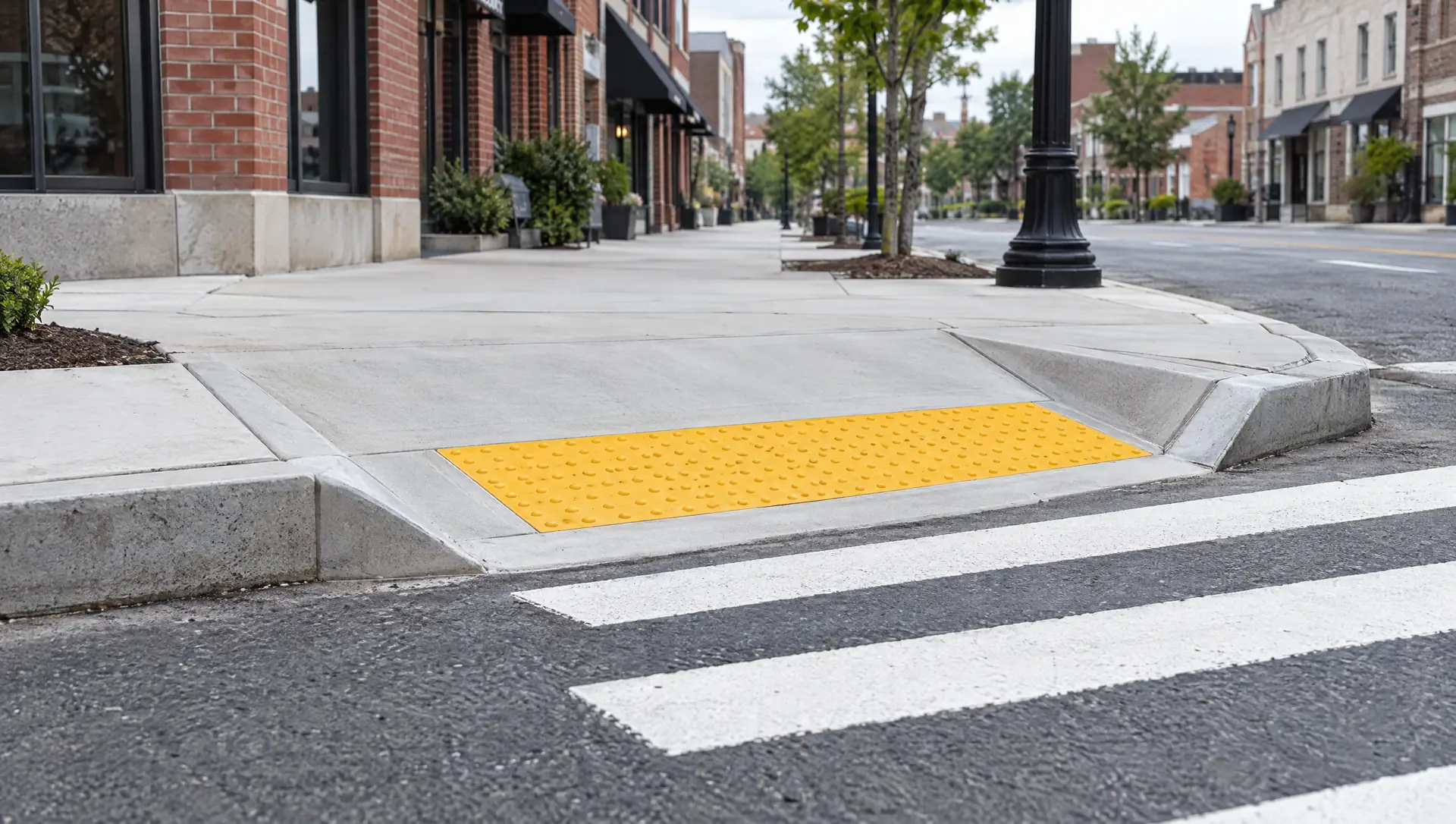
- Detectable warnings are at least 24 inches deep and span the full width of the ramp.
- Resurfacing a street generally counts as an alteration and triggers curb ramp work at the crossings.
Curb ramps are small pieces of concrete with a lot of rules attached. For towns, counties and property owners in New Jersey, getting the slopes, landings and warning surfaces right is what makes a crossing usable for someone in a wheelchair, using a walker or with low vision. Here's what the current federal guidance says, in plain terms.
Which rules apply?
Two federal documents come up on almost every ramp project:
- The 2010 ADA Standards for Accessible Design, which cover buildings and sites.
- PROWAG, the Access Board's guidelines written specifically for sidewalks, crossings and other pedestrian facilities in the public right-of-way. The final rule took effect September 7, 2023. It is not an enforceable standard until DOJ and DOT adopt it, but many agencies already design to it.
Your project specifications and the agency's standard details control on any given job, so always start there.
The key numbers (PROWAG)
| Element | PROWAG |
|---|---|
| Running slope (along the ramp) | 8.3% (1:12) maximum. A ramp doesn't have to run longer than 15 feet to meet it. |
| Cross slope (side to side) | 2.1% (1:48) maximum. At crossings it can match the street grade: up to 2.1% where vehicles stop or yield, up to 5% where they can pass through without stopping (uncontrolled crossings or signals). |
| Clear width | 48 inches minimum |
| Turning space at the top | 48 x 48 inches minimum |
| Clear space at the bottom | 48 x 48 inches minimum, at 5% maximum slope |
| Flared sides | 10% (1:10) maximum slope |
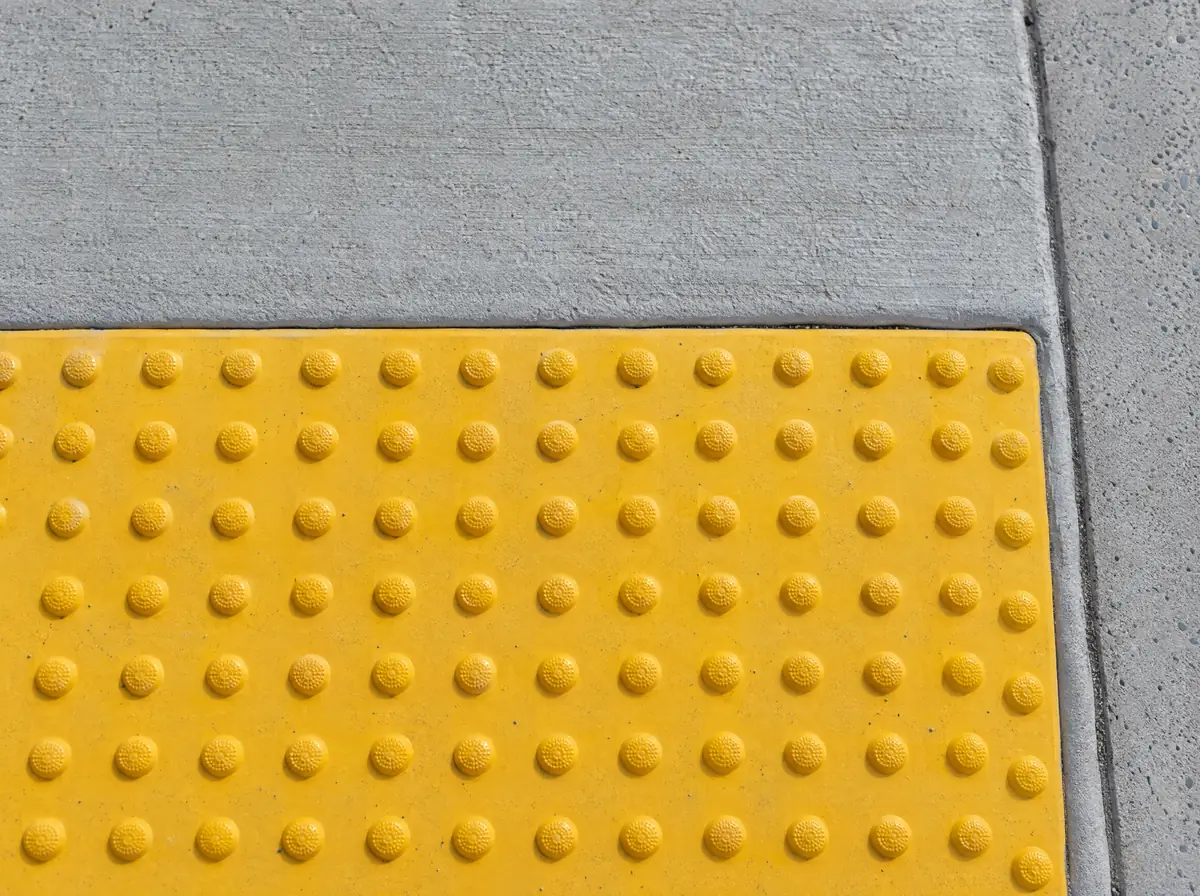
| Detectable warning | 24 inches deep minimum, full width of the ramp, visually contrasting |
Detectable warnings
The truncated-dome panel at the bottom of the ramp tells someone with low vision they're about to enter the street. It needs to cover the full ramp width, be at least 24 inches deep in the direction of travel and contrast visually with the surrounding surface. Panels that are loose, cracked or worn smooth stop doing their job and are a common item on accessibility audits.
When road work triggers new ramps
The Department of Justice and the Federal Highway Administration issued joint guidance in 2013 on this question. In short:
- Resurfacing is treated as an alteration. That includes a new layer of asphalt, reconstruction, concrete pavement rehabilitation, micro-surfacing and thin-lift overlays, cape seals and in-place asphalt recycling. When a street is altered this way, curb ramps need to be provided or upgraded at the crossings in the project area.
- Maintenance is not an alteration. That includes crack sealing, chip seals, slurry seals, fog seals, pavement patching, diamond grinding and re-striping.
- Several maintenance treatments done together at about the same time can add up to an alteration.
For towns planning a paving program, this means curb ramps belong in the budget and the bid documents from the start.
Common reasons ramps fail inspection
- Running slope or cross slope over the limit, often because the existing grades weren't surveyed before forming
- A lip at the bottom where the ramp meets the gutter
- Water ponding at the bottom of the ramp
- Missing or too-small turning space at the top
- Detectable warnings that are short, misaligned or not contrasting
Most of these are caught by checking grades with a digital level before the pour, not after.
Common questions
Is PROWAG required in New Jersey right now?+
Does repaving a street mean the town has to rebuild curb ramps?+
How wide does a curb ramp need to be?+
Sources
Curb ramps or sidewalk work on your list?
Mehal Construction Corp. is registered with SAM.gov for federal contracting and with NJ Public Works for state government contracting.
Related guides
Property Owners
Who is responsible for sidewalk repair in NJ towns?
How New Jersey treats homes, businesses and towns when a public sidewalk is damaged.
Read the guide
Public Works
Preparing to bid public work in NJ
The registrations, forms and deadlines contractors deal with on New Jersey public bids.
Read the guide